The Cheapest Rate Is Rarely the Cheapest Shipment
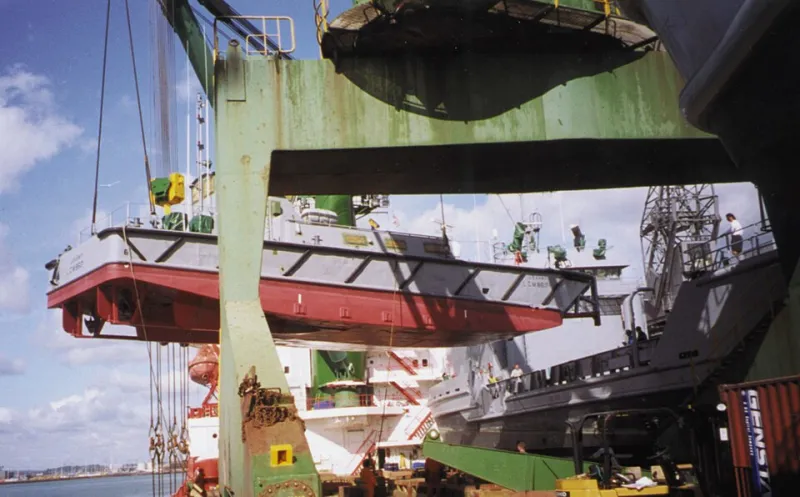
Photo: contact Marge Holtz or Lisa Gates at (202) 685-5055, Public domain, via Wikimedia Commons
Ask three forwarders for a rate from the Midlands to Belgrade and the three numbers will rarely describe the same shipment. One will quote port to port. One will quote door to door but exclude destination charges. One will include everything except the customs entry, the transit guarantee and the two days the container waits for a release. The lowest headline figure is an accounting artefact as often as it is a bargain.
For UK exporters still learning these lanes, the practical task is not to find the cheapest quote but to make the quotes comparable. That means reading them as cost stacks rather than prices.
Start with the scope, not the number
Before comparing figures, establish what each quote actually covers: the Incoterm it assumes, the named place, the mode and routing, the container or trailer type, and whether the price holds for the volume you expect to ship rather than the single pallet you described on the enquiry. A rate built on one shipment per month and applied to four will not survive the first invoice.
Only once the scopes align is the arithmetic worth doing. In practice, most of the divergence sits below the headline in charges that are legitimate, standard and almost never volunteered.
Seven places the money hides
Destination terminal handling. Often excluded from an export-side quote because the forwarder's contract is with the origin agent. It is charged per container or per tonne and it varies substantially between ports. If a quote is silent on destination handling, it is not free; it is someone else's invoice.
Brokerage minimums and per-line charges. A customs entry is commonly priced as a base fee plus a charge per additional commodity code. A consignment with twelve tariff lines can cost several times what the shipper assumed from a single-line example. Ask for the per-line rate and the minimum charge in writing.
Bond and guarantee costs. Transit movements under a T1 procedure, deferred duty arrangements and any guarantee required by a carrier or authority carry a price. It may be a fixed fee, a percentage of the duty at risk, or a deposit. On higher-duty goods this line can exceed the freight itself.
Free time, waiting time and detention. Containers come with a free period at destination; trailers come with a driver who is paid by the hour. Both produce charges when a delivery is delayed by a missing certificate, a warehouse that will not accept a late arrival, or a public holiday that nobody checked. Establish the free days in the quote and who pays beyond them.
Amendment and re-lodgement fees. Changes made after an entry is submitted — a wrong description, a missing preference document, a corrected value — attract a fee and, worse, a queue. On time-critical lanes the administrative charge is the smaller loss.
Origin documentation and certification. Certificates of origin, preference evidence, legalisation and courier costs for the paperwork itself are frequently excluded. These are small sums individually and a genuine line in aggregate, particularly where a certificate must be issued and then corrected.
Ancillary handling. Security surcharges, weighbridge and re-weigh fees, sealing, pallet exchange or disposal, buffer storage and the return of empty equipment. None of these is improper. All of them appear on invoices where they did not appear on the quote.
Questions to put to a forwarder before booking
A short interrogation narrows the field quickly.
- Is this door to door, and is destination handling included at the named place?
- What is the customs brokerage charge, and what is the per-line rate above the minimum?
- Who arranges the transit guarantee, and how is it priced?
- How many free days apply at destination, and what is the daily rate afterwards?
- What do you charge for an amendment after lodgement?
- Which documents are excluded, and who pays the courier?
- What assumptions about volume and frequency does this rate rest on?
- If the shipment is held, who tells me, on what day, and at whose cost?
Written answers to those eight questions do more for a procurement decision than a spreadsheet of headline rates.
Normalising the comparison
Build a single sheet with a column per quote and a row for every charge identified above, then add the duty and import tax payable regardless of carrier so that the landed cost per unit is visible. Where a quote cannot be completed because the forwarder will not commit, record the omission as a risk rather than a zero. The cheapest compliant shipment, not the cheapest rate, is the figure that belongs in a margin calculation.
Two further columns are worth carrying. Transit reliability on the specific lane matters more than a few tens of pounds when a customer is waiting, and the quality of post-booking communication determines whether a delay costs one day or five. A forwarder who answers questions before the booking will usually answer them after it as well.
Where the risk actually sits
The most aggressive headline rates tend to come from providers who book capacity late, consolidate aggressively and pass the consequences downstream. That is a legitimate business model, and it can serve shippers with flexible delivery windows well. It is a poor fit for a UK exporter whose contract contains a penalty clause and whose goods require a certificate that must be issued before arrival.
Read the quote as a description of a service, not just a price. The fees that hide are the ones that were never in scope, and the shipment that costs most is the one nobody planned for.