When the Buyer Picks the Currency: Managing Local-Currency Risk in Europe's New Markets
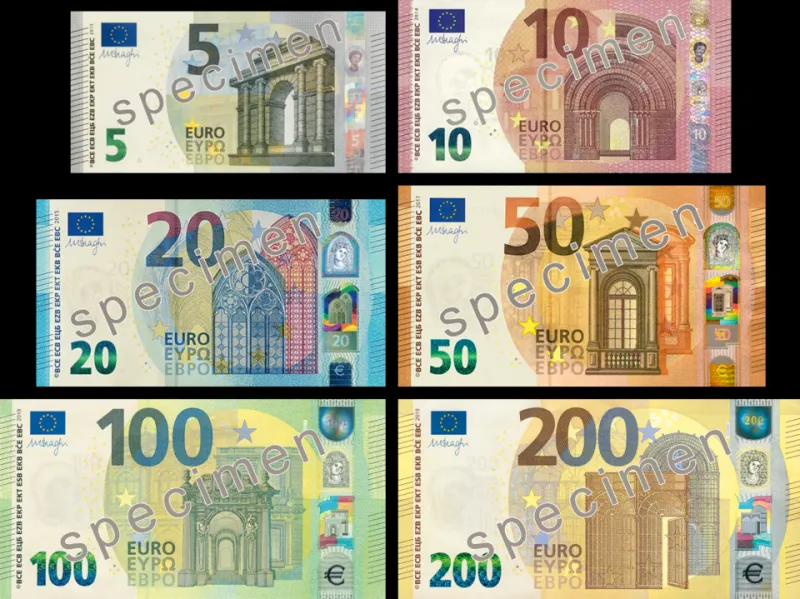
Photo: The RedBurn, ECB decisions ECB/2003/4 and ECB/2003/5, via Wikimedia Commons
A UK exporter quoting in euros across Romania, Moldova and Ukraine is often running a currency mismatch it has not noticed. The sale may be denominated in euros, but the buyer's revenue is in lei, hryvnia or lari, and the moment that buyer asks for local pricing, the exposure moves. The question for a founder is not whether to accept local currency, but how much of the risk to carry and at what price.
Two leus and a handful of others
The region uses a wider set of currencies than the map suggests. Romania prices in RON, Moldova in MDL, Ukraine in UAH, Georgia in GEL, Serbia in RSD, Albania in ALL, North Macedonia in MKD and Bosnia and Herzegovina in the convertible mark. Montenegro and Kosovo use the euro unilaterally, without being in the euro area.
Buyers have a straightforward reason for preferring local denominations: they invoice their own customers in local currency, they report in it and they borrow in it. Asking them to take sterling or euro risk on a nine-month contract is asking them to absorb a cost they can avoid by choosing a competitor who will not.
Rank the currencies before the counterparties
It helps to sort the region into three tiers, because the hedging answer is different in each.
| Tier | Currencies | What it means commercially |
|---|---|---|
| Effectively euro | EUR in Montenegro and Kosovo; BAM in Bosnia, pegged at 1 EUR = 1.95583 BAM under a currency board; MKD, pegged in practice | Little translation risk, but convertibility, bank access and correspondent costs still matter |
| Managed | RON, ALL, RSD | Short-term volatility is modest, forwards are available, and the risk is in the tail |
| Floating or thin | MDL, GEL, UAH | Wider moves, thinner hedging markets, and in Ukraine currency controls and repatriation rules that shape when money can leave |
Romania's long-standing aspiration to adopt the euro is worth knowing about and worth ignoring for contracting purposes. No credible entry date should be built into a commercial agreement, and a clause that assumes one will simply need amending.
The costs that are not the exchange rate
Payment rails often cost more than the rate. Romania sits inside SEPA, so a RON payment to a supplier in Cluj is unremarkable. Moldova, Ukraine, Georgia and much of the Western Balkans sit outside or at the edge of SEPA, where correspondent banking, intermediary fees and multi-day value dates are normal. Moldova and Ukraine have been moving toward SEPA reachability, so confirm the current position with your bank rather than assuming either way.
Then decide what counts as payment. A transfer instructed on the due date that lands three working days later is late on most standard terms unless the contract says otherwise. Specify cleared funds in a named account, and name the account.
Four ways to hold the exposure
Price in sterling or euro and accept slower collections. Simple and defensible, but you are effectively financing the buyer, and the cost shows up as a longer cash cycle rather than a line in the accounts.
Price in local currency with an adjustment clause. Index the invoice to a published reference rate and share movements beyond an agreed band. This is the most common solution in the region and the easiest to explain to a finance director.
Hedge naturally. If you hold local costs, such as a sales office, a small warehouse or locally employed staff, local revenue offsets them. Natural hedging is cheap and does not require treasury infrastructure.
Hedge financially. Forwards are available and reasonably priced in RON, and to a lesser degree in RSD and ALL. MDL, GEL and UAH are thinner; Ukrainian exposure may require a non-deliverable structure or may not be hedgeable at an acceptable cost, in which case pricing and terms must carry the risk instead.
Clauses worth arguing over
- State the currency of account and the currency of payment separately. They need not be the same.
- Name the reference rate and the fixing moment: the central bank source, the date and the time of day.
- Set a dead band, for example movements of plus or minus 2.5% absorbed by the seller and anything beyond shared equally.
- Define discharge of payment as cleared funds in a named account.
- Provide for late-payment interest and state the currency in which it is calculated.
- Choose a neutral seat for disputes. LCIA arbitration or a stable European forum usually beats a local court on predictability.
- Build in a repricing review at twelve months and on any movement beyond an agreed threshold.
A short decision framework
Ask five questions in order. What currency are my costs in? Can the buyer's currency be converted and repatriated without friction? How long is the exposure? What margin can absorb a 10% move? And can I enforce the clause I am about to sign?
If costs are in sterling and the exposure runs nine months, hedge or price in sterling. If the exposure is thirty days and comfortably inside the dead band, the clause is enough. If the currency is pegged, spend your effort on the payment rail instead of the rate.
UK housekeeping
HMRC permits invoices in a foreign currency, but VAT must be converted to sterling using the rates it publishes monthly. Companies reporting under FRS 102 will need a consistent policy on translating monetary balances at the closing rate, and group accounts should reflect the same exposures the sales team has agreed.
Treasury documentation matters too. A written policy setting out who may agree local-currency terms, at what thresholds and using which instruments is the difference between a hedge and a bet, and it is the first thing an acquirer will ask for.
The margin view
For a founder running a 6% net margin, an unhedged 10% currency move on a third of turnover is not a variance. It is the year. Quoting in the buyer's currency is frequently the price of the order; being paid for the risk you take on is the discipline that makes it worth having.