When the Faulty Unit Stays Abroad: After-Sales Architecture for UK Sellers in New Europe

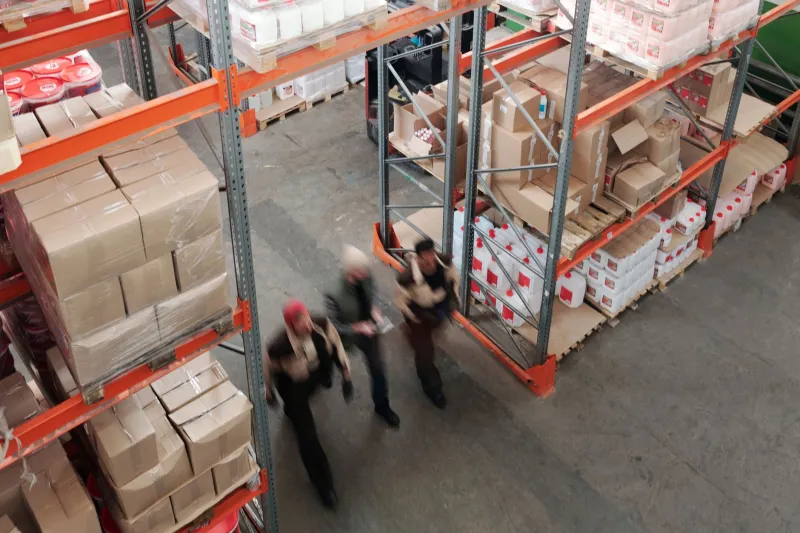
Photo: pranavdevp.m dubbing artist, CC0, via Wikimedia Commons
Most export plans stop at delivery. The invoice is raised, the consignment clears, the distributor signs. What the file rarely contains is an answer to a simpler question: what happens when the unit comes back?
For UK sellers active in Serbia, Romania, Moldova and Albania, that question is not a customer-service detail. A faulty pump returned from Belgrade, a defective controller sent back from Cluj-Napoca, a warranty replacement despatched to Chișinău — each is a separate movement of goods with its own customs treatment, its own VAT consequence and its own evidential requirements. Handled ad hoc, a single return can consume the margin on a dozen sales. Handled as a designed process, most returns never need to cross a border at all.
The Return Leg Is a Customs Event
The first misconception is that returned goods travel back 'as they came'. They do not. Goods leaving the UK attract export declarations; goods re-entering attract import declarations, and the relief that softens the blow is neither automatic nor uniform across the region.
For Romania, the EU returned-goods relief framework allows re-import with duty relief where the goods were originally exported from the EU customs territory and are returned within three years, in substantially the same condition. UK-origin goods that were exported from the UK are not, by definition, EU goods returning home — the relief analysis turns on the customs status at the point of export, and a UK exporter shipping from a UK warehouse will usually be importing into the EU for the first time, not re-importing. The same logic applies with local variations in Serbia, Moldova and Albania, where national re-import regimes exist but hinge on documentary proof that the specific goods were previously exported, and on time limits that a slow warranty conversation can easily exhaust.
Warranty replacement is the sharper edge. Sending a new unit free of charge does not make it a non-import. Customs value is normally the transaction value of the replacement, and 'free of charge' is a commercial description, not a valuation method. Where the replacement is made under a contractual warranty, some administrations accept a reduced or nil value with the original supply evidence attached; others do not. The difference is decided at the counter, by the broker, on the strength of the file.
Repair Locally, Declare Carefully
For most UK sellers, the cheapest return is the one that never happens. A vetted local repair partner inside the market can absorb the first-line fault, keep the customer relationship intact and avoid the outbound and inbound legs entirely.
That arrangement has its own compliance spine. Parts shipped to the partner for a warranty repair are imports in their own right. Tooling, diagnostic equipment and loan units moved temporarily need the right temporary-admission paperwork, and an ATA Carnet remains the most portable answer for equipment that travels with an engineer. The repair partner's own VAT and customs status matters too: a partner who is not the importer of record cannot simply receive goods under your name.
Where the fault is complex and the unit must travel, temporary export for repair — outward processing in EU terms, and its national equivalents elsewhere — allows the goods to return with duty charged only on the repair value, provided the process is declared at the point of export rather than reconstructed afterwards. Reconstructing it afterwards is where most claims fail.
VAT: The Credit Note Is Not the End of the Story
The VAT treatment of a return is frequently confused with the commercial treatment. Issuing a credit note does not, by itself, reverse an import VAT liability that has already been incurred and, in many cases, recovered by the importer. Where the importer is your distributor, the reversal belongs in their return, not yours, and only if the underlying documents support it.
In Romania, e-invoicing through the national system means the credit note must exist in the same structured format as the original invoice, and the customs paperwork must be reconcilable to it. Serbia's e-invoicing regime and Albania's fiscalisation rules impose comparable discipline. Moldova's e-invoicing obligations have been extending in scope, and a UK finance team issuing a PDF credit note from Manchester is not discharging a local obligation.
Two practical rules follow. First, decide before the sale who bears import VAT on any return leg, and write it into the distributor or reseller agreement. Second, keep the original export declaration, the import entry, the RMA reference and the credit note in one retrievable file per unit, indexed by serial number. Serial-level traceability is the single most useful investment in this area.
Consumer Law Sits With the Seller, Not the Courier
The legal obligation to remedy a faulty product is created by the consumer's local law, not by the return logistics. Romania applies the EU two-year legal guarantee of conformity, with a burden of proof weighted towards the consumer in the early period. Serbia's consumer protection framework imposes its own conformity obligations and remedy periods. Albania and Moldova have both moved closer to EU acquis standards in recent years, and enforcement attention has grown alongside accession ambition.
None of this is displaced by a returns policy drafted for the UK market. A clause that limits remedy to repair at the seller's discretion, or that requires the consumer to bear return postage in all cases, may be unenforceable locally. Consumer terms need local-language versions, a local address for service, and a route to the relevant alternative-dispute-resolution body. This is a legal drafting task, not a logistics one, and it should be completed before a product is listed rather than after a complaint arrives.
Four Routes and When Each Earns Its Place
A workable after-sales architecture usually combines all four of the following, with a decision rule attached to each.
- Local repair partner. Default for high-volume, repairable categories. Requires a vetted partner, a parts pipeline and a clear warranty authority limit.
- Return to the UK. Reserve for high-value units, engineering analysis or regulatory investigation. Budget for the outbound leg, the re-import and the consumer's statutory rights while the unit is away.
- In-market replacement. The fastest remedy and the most customer-friendly. It requires a small buffer stock held under a customs arrangement that reflects its purpose, not a generic distribution entry.
- Scrap and credit. For low-value units where the freight exceeds the product's worth. This still needs a documented disposal in the market and a credit note that satisfies local invoicing rules.
Each route should carry a threshold — by value, by category, by country — written down and understood by the distributor, the 3PL and the finance team.
Build the File Before the First Fault
A returns policy that stands up in 2026 is built from evidence generated at the point of sale: serial numbers captured at despatch, a warranty term that matches the local legal minimum rather than undercutting it, an RMA process that assigns a customs route before the goods move, and a named importer for every replacement. Add a returns provision to the price of every unit sold into the market, and the economics stop being a surprise.
The test is simple. Take any unit you have shipped to Serbia, Romania, Moldova or Albania this year and ask whether you could produce, within an hour, the export declaration, the warranty terms in the local language, the name of the entity that would receive it back, and the credit note template. If not, the return address is still a problem — and the fix is cheaper now than at the border.