Five Administrative Pitfalls That Can Delay UK CBAM Consignments in 2026
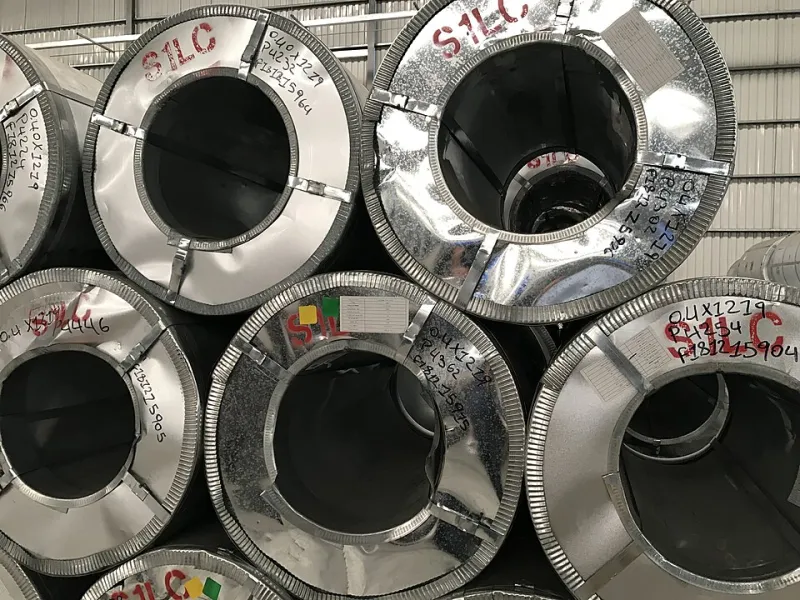
Photo: Arosset, CC BY-SA 4.0, via Wikimedia Commons
As of 7 November 2026, the EU’s carbon border adjustment mechanism is no longer a transitional exercise. For UK exporters of steel, aluminium and other covered goods, the practical question is no longer whether CBAM matters but whether the paperwork attached to a consignment will survive scrutiny at the EU border. The mechanism places the legal obligation on the EU importer, yet the data that makes a declaration possible usually sits with the UK exporter and its suppliers. That split responsibility is where delays begin.
Most problems are administrative rather than commercial. A missing installation identifier, an emissions figure that cannot be reconciled to a production route, or a supplier that cannot respond inside the importer’s reporting window can hold up clearance and, in some cases, force renegotiation of delivery terms. The five traps below are the ones that founders and export managers should design out before the next shipment leaves the UK.
Trap one: Using a generic emissions estimate for a specific product
CBAM calculations are product- and installation-specific. A company-wide average emissions figure may be useful for internal reporting, but it is rarely enough for an EU importer preparing a CBAM declaration. Steel made through a blast furnace route has a different emissions profile from steel made through electric arc furnaces. Primary aluminium and recycled aluminium are not interchangeable. Precursor materials, electricity sources and allocation methods all affect the final number.
A common failure is for a UK exporter to send an estimate based on last year’s site average without explaining the production route, the reporting period or the boundary used. The importer then cannot reconcile the figure with the installation data it must hold. The consignment may still arrive, but the compliance file becomes a source of queries.
Useful checks include mapping the CN code and production route for each product, identifying precursor suppliers, confirming whether direct and indirect emissions are included, documenting the electricity emission factor, and recording any allocation method. Default values may have a role where data is unavailable, but they should be a commercial decision rather than an accident.
Trap two: Assuming the importer will arrange supplier verification
Under the definitive regime, actual emissions data must be capable of verification. UK suppliers should expect requests for site-level evidence, meter readings, production records and access for an accredited verifier. If verification is left until the annual declaration cycle, small gaps become urgent problems.
A UK aluminium extruder with several billet suppliers may find that one supplier cannot provide installation-level data in time. A steel processor may discover that its electricity contract does not support the emission factor used in its spreadsheet. These are not unusual scenarios. They are the normal consequence of leaving verification to the last minute.
Exporters should identify early who will verify the data, agree data-sharing arrangements with suppliers, prepare a methodology memo, and retain the underlying evidence. The aim is not to create a parallel audit industry inside the business. It is to ensure that the importer can answer questions without repeatedly returning to the UK supplier.
Trap three: A messy importer handoff
The EU importer is the CBAM declarant, but it depends on the UK exporter for product-level information. A handoff that relies on email attachments, inconsistent spreadsheets and unnamed contacts will slow down customs clearance and annual reporting alike.
A practical CBAM pack should include the installation identifier, CN code, quantity, embedded emissions figure, methodology notes, verifier details where available, and a named contact for follow-up. Version control matters. If the importer receives one figure from the commercial team and another from the sustainability team, confidence falls quickly.
Export managers should confirm the importer’s template before the first shipment, test it with a single product line, and keep a deadline calendar for data requests. Customs brokers should be briefed on what has changed. A clean handoff is not bureaucracy for its own sake; it is the difference between a routine clearance and a shipment held while two organisations reconcile their records.
Trap four: Misreading the scope and CN code
CBAM scope is defined by the goods concerned, not by the exporter’s intention. A UK business may assume that a processed article falls outside the mechanism, or that a component is classified separately from the finished product, only to find that the EU importer treats it as covered. Classification errors can also affect the emissions data required.
Before shipping, exporters should confirm the CN code and goods description with a customs adviser, check whether processing changes the treatment, and document the reasoning. Old transitional assumptions should not be carried forward without review. Where there is doubt, an advance ruling or written advice is cheaper than a delayed consignment.
Trap five: Letting evidence decay
CBAM compliance is a records discipline. Supplier relationships change, staff leave, production lines are modified and electricity contracts expire. Evidence that was adequate at the time of shipment can become difficult to reconstruct two years later.
A central archive should hold supplier declarations, production logs, electricity contracts, methodology documents, verifier reports and correspondence with the importer. Contracts with suppliers should include data-provision clauses and notice periods for changes in production route. The archive should be owned by a named individual, not left to the export manager’s inbox.
The exporters that fare best in 2026 will be those that treat carbon data as part of commercial documentation, not as a year-end scramble. CBAM is often described as a carbon price. In day-to-day export operations, it is just as much a test of data quality, supplier cooperation and administrative discipline.